
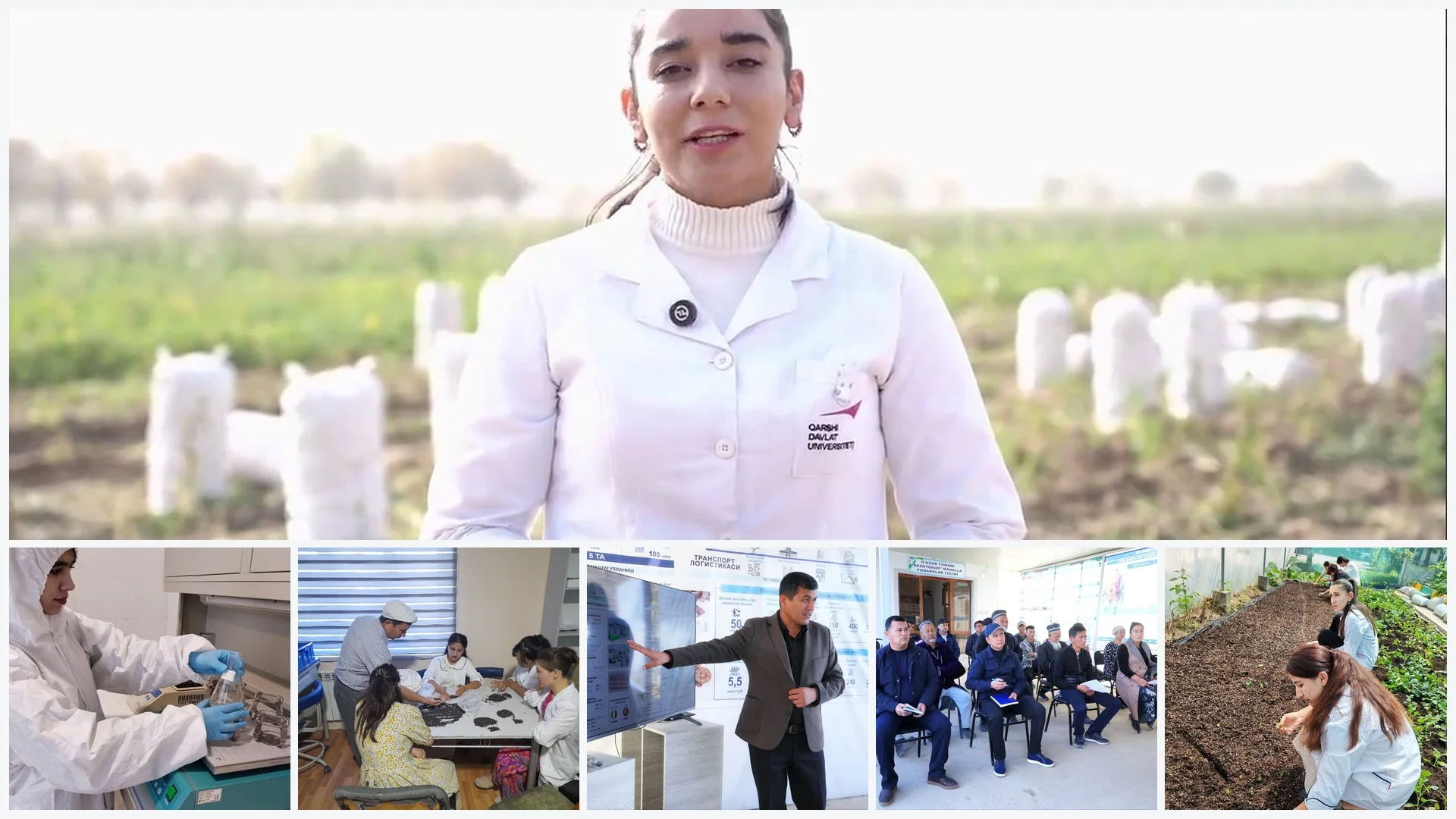
Karshi State University participated in a practical seminar held in Dashtobod mahalla, Guzar District, focusing on the development of food production and agricultural exports. A representative of the university's Department of Agrochemistry and Ecology took part in discussions with local farmers, agricultural producers, community representatives, and other stakeholders. The seminar addressed opportunities for growing, processing, preserving, packaging, and exporting locally produced vegetables, including tomatoes, cucumbers, carrots, turnips, radishes, and bell peppers. Participants also discussed practical challenges faced by local farmers and received responses to their questions from relevant specialists.
This activity demonstrates the university's engagement with the local agricultural community and its potential contribution to knowledge exchange and the development of local food production.
Scientific research at the department of agrochemistry and ecology of Karshi State University
Under the leadership of Professor T. Ostonakulov, academic staff, young researchers, and master's students at the Department of Agrochemistry and Ecology of Karshi State University are conducting scientific research on crops such as early potatoes, sweet corn, watermelons, sweet potatoes, and tomatoes. As a result of these studies, new potato varieties, including New Uzbekistan and Ultraeshim, and new maize varieties, including Qumqishloq, Yangi Hayot, Qardu-10, Qardu-100, and Qardu-1000, have been developed. These varieties are distinguished by their high yields and resistance to diseases. More than 30 potato varieties have been tested under local conditions in the region to identify the most suitable varieties and determine optimal planting periods. The research has scientifically demonstrated the potential to produce 28–30 tonnes of early potatoes per hectare. The research findings have been tested in practice at farms in Karshi, Kokdala, and Nishon districts, demonstrating their practical value for local agricultural production.
These research activities contribute to agricultural innovation, improved crop productivity, and the dissemination of research-based agricultural knowledge to local farming communities.
Agrochemistry students conduct greenhouse training for rural women
Students majoring in Agrochemistry at Karshi State University conducted a practical training session for rural women on the cultivation and care of agricultural crops in greenhouse conditions. During the training, participants received practical guidance on planting seedlings, proper watering techniques, soil management, plant nutrition, and effective methods for maintaining healthy crops in greenhouses. The session aimed to strengthen rural women's agricultural knowledge and practical skills, promote sustainable farming practices, and support local food security.
This initiative reflects the university's commitment to sharing agricultural knowledge with local communities, empowering rural women, and promoting sustainable agricultural development.
Soil Analysis and Agrochemical Knowledge for Sustainable Food Production
Karshi State University promotes the application of agrochemical knowledge and modern laboratory methods to support sustainable agriculture and food security.
Through practical laboratory activities, students develop skills in soil and plant sample analysis, soil quality assessment, and understanding the factors that influence crop growth and productivity. These activities help connect scientific knowledge with practical agricultural challenges and encourage the responsible use of soil and plant resources.
Sharing knowledge about soil fertility, plant nutrition, and sustainable crop production is essential for improving agricultural practices, strengthening food security, and supporting resilient local food systems.