
Promoting digital safety and responsible citizenship among youth
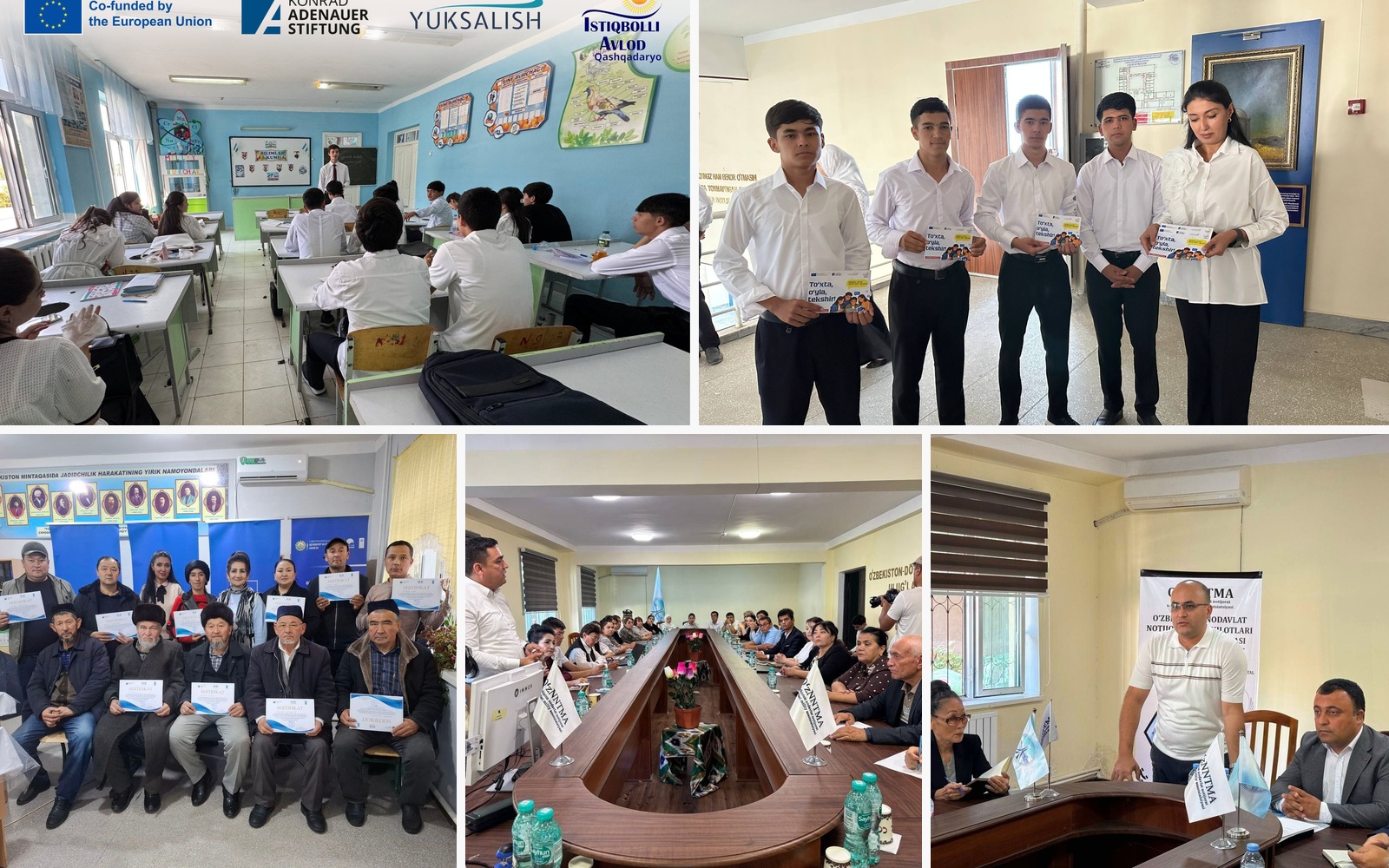
Karshi State University participated in the "To'xta, o'yla, tekshir" ("Stop, Think, Verify") initiative implemented within the framework of the "Digital Voice" project. The initiative was carried out in cooperation with the Qashqadaryo "Istiqlolli Avlod" Social Information Center and the Yuksalish Movement, with support from the Konrad-Adenauer-Stiftung and the European Union. Volunteer students from the Faculty of Economics of Karshi State University participated as speakers.
As part of the initiative, educational and awareness-raising activities were organized for university students and young people on:
-digital safety and responsible internet use;
-identifying misinformation and suspicious online information;
-critical evaluation of information sources;
-protection of personal data;
-responsible behavior on social networks;
-prevention of online risks and manipulation.
The activities contributed to the development of young people's digital literacy, critical thinking and responsible participation in society, supporting SDG 4 (Quality Education), SDG 10 (Reduced Inequalities), SDG 16 (Peace, Justice and Strong Institutions) and SDG 17 (Partnerships for the Goals).
Environmental awareness and sustainable waste management
Karshi State University also collaborates with civil society organizations on environmental sustainability and responsible waste management.
Within the "Toza shahar" ("Clean City") educational campaign, implemented in cooperation with the National Association of Non-Governmental Non-Profit Organizations of Uzbekistan (NANGO/NNTMA) and relevant environmental institutions, an educational event was organized at Karshi State University.
The event brought together university professors, students and young people to discuss:
-sustainable waste management;
-waste separation and recycling;
-responsible consumption;
-circular economy principles;
-environmental responsibility;
protection of the local environment.
Students actively participated in discussions and shared their ideas and proposals for improving environmental awareness and responsible waste management. This collaboration directly supports SDG 11 (Sustainable Cities and Communities), SDG 12 (Responsible Consumption and Production), SDG 13 (Climate Action) and SDG 17 (Partnerships for the Goals).
Supporting community development and local initiatives
Karshi State University also contributes to community development through cooperation with civil society organizations and initiatives focused on strengthening local communities.
A practical seminar-training on developing master plans for neighborhoods was organized to enhance participants' understanding of community-based planning and local development. University students and educational institutions were involved in developing practical approaches to addressing community needs.
Such activities encourage young people to participate in community development and strengthen cooperation between educational institutions, civil society organizations and local communities. The initiative supports SDG 11 (Sustainable Cities and Communities), SDG 4 (Quality Education) and SDG 17 (Partnerships for the Goals).
Building the capacity of civil society organizations
Karshi State University has also supported capacity-building activities for civil society organizations through cooperation with NGO networks.
A practical seminar-training on "Project Development and International Grant Writing" was organized in Karshi with the participation of representatives of civil society institutions and NGOs. The training was conducted with the involvement of the National Association of Non-Governmental Non-Profit Organizations of Uzbekistan (NANGO/NNTMA) and focused on strengthening the ability of NGOs to develop and implement effective projects.
Participants received practical guidance on:
-understanding international donors' requirements;
-developing project ideas;
-defining project objectives and activities;
-establishing partnerships with international organizations;
-ensuring project sustainability and effectiveness;
-preparing competitive grant proposals.
The training strengthened the capacity of civil society organizations to attract international resources and implement projects addressing social and community development challenges. This activity contributes particularly to SDG 16 (Peace, Justice and Strong Institutions) and SDG 17 (Partnerships for the Goals).
Impact of NGO collaboration
Through these partnerships, Karshi State University uses education, youth engagement and community-based initiatives as practical mechanisms for advancing the SDGs. The University's cooperation with NGOs and civil society organizations has contributed to:
-increasing young people's awareness of digital safety and responsible information use;
-strengthening environmental awareness and sustainable waste management practices;
-developing the capacity of NGOs to prepare and implement international grant projects;
-encouraging youth participation in community development;
-promoting responsible citizenship and social engagement;
-strengthening partnerships between the university, NGOs, civil society and local communities.
These initiatives demonstrate Karshi State University's commitment to SDG 17 – Partnerships for the Goals, while simultaneously contributing to SDGs 4, 10, 11, 12, 13 and 16 through practical collaboration with non-governmental and civil society organizations.
Through strong partnerships with NGOs and civil society organizations, Karshi State University transforms the SDGs from global commitments into practical actions at the university and community level.