
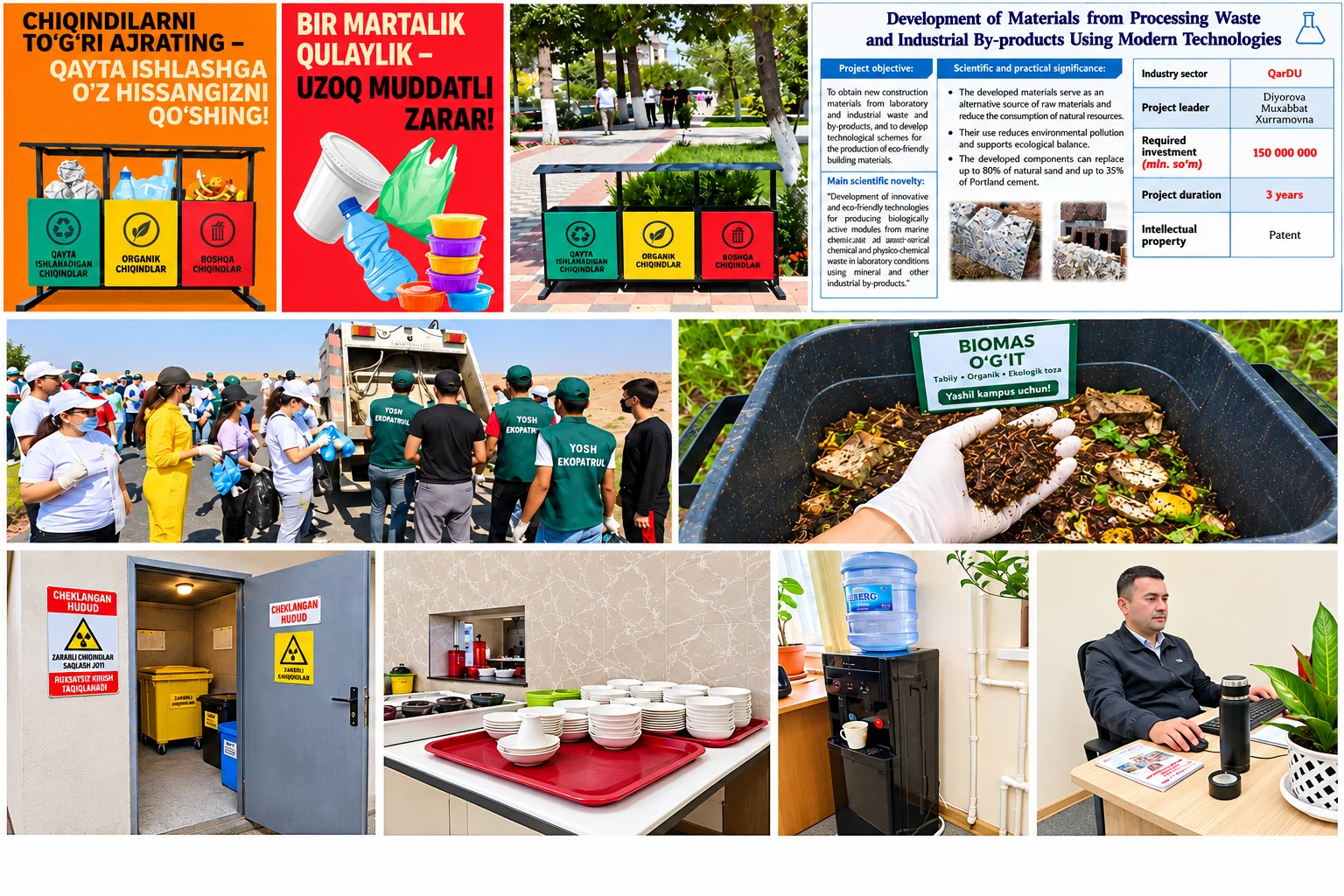
Karshi State University (KSU) implements a comprehensive 3R (Reduce, Reuse, Recycle) waste management program to minimize waste generation, reduce resource consumption, and promote environmental sustainability across the campus.
Reduce
The university actively reduces paper and plastic consumption through digital transformation initiatives. Administrative documents, academic materials, student records, attendance systems, and internal communications are increasingly managed through electronic platforms. Smart attendance monitoring systems, online learning resources, and digital document management significantly decrease paper usage. To reduce single-use plastics, students and staff are encouraged to use reusable water bottles, cups, and food containers. The university also promotes environmentally friendly alternatives during campus events and daily operations.
Reuse
KSU encourages the reuse of materials and resources whenever possible. Office furniture, electronic equipment, laboratory materials, and educational resources are repaired, refurbished, and reused to extend their service life. Reusable containers and storage materials are utilized in various administrative and academic departments. The university also promotes double-sided printing and the reuse of partially used paper for internal purposes whenever appropriate.
Recycle
Waste segregation bins are installed across academic buildings, administrative offices, dormitories, and public areas to facilitate the separation of recyclable materials such as paper, plastic, metal, and cardboard. Collected recyclable waste is transferred to authorized recycling organizations for proper processing and recovery.
Awareness campaigns, educational seminars, and environmental events encourage students and staff to participate actively in recycling activities and responsible waste management practices.
Organic waste recycling into biomass fertilizer
All leaf waste generated from campus landscaping activities (17.5 tons) is up-cycled into nutrient-rich biomass fertilizer through vermicomposting using California red worms. The resulting organic fertilizer is applied to trees, flower beds, and green spaces throughout the university campus, supporting sustainable landscape management
Double-sided printing policy
In accordance with the Rector's Order issued to implement the Ministry of Higher Education, Science and Innovation of the Republic of Uzbekistan (Order No. 163, dated April 27, 2025), Karshi State University has introduced a mandatory double-sided printing policy across all administrative and academic units. All university departments are required to minimize paper consumption by using duplex (double-sided) printing as the default printing option. The policy is complemented by the transition to fully electronic document management, including internal correspondence, administrative orders, meeting minutes, and reports. To further reduce paper consumption, the university organizes a monthly "Paperless Day" campaign during which all document circulation is conducted electronically. In addition, the university prioritizes the procurement and use of recycled paper products and has established targets to gradually reduce expenditures on paper, ink, printers, and photocopying equipment.
Impact
1)Reduction in paper consumption through digital administration and learning systems.
2)Decreased use of single-use plastic products on campus.
3)Increased reuse of institutional resources and materials.
4)Improved waste segregation and recycling rates.
5)Enhanced environmental awareness among students and staff.
6)Reduced environmental footprint and contribution to a cleaner, greener campus.
Through the implementation of the 3R principles, Karshi State University strengthens its commitment to sustainable resource management and supports the development of an environmentally responsible campus community.
The management of toxic waste at Karshi State University (KSU) is coordinated by the university's Environmental Sustainability and Facilities Management Unit in cooperation with academic departments, laboratories, medical training units, and maintenance services. Toxic waste generated on campus includes laboratory chemicals, contaminated laboratory materials, used batteries, fluorescent lamps, printer cartridges, chemical containers, and other hazardous materials arising from teaching, research, and operational activities. Hazardous waste is segregated at the source and collected in clearly labeled containers according to its type and risk category. Dedicated temporary storage areas are provided to ensure the safe containment of toxic waste prior to collection and transportation. Laboratory personnel, technicians, and maintenance staff are trained in proper waste handling, packaging, labeling, storage, and emergency response procedures in accordance with environmental and occupational safety requirements. All toxic waste generated by the university is transferred to Eco Trans, a licensed centralized waste collection and disposal organization in Uzbekistan. Eco Trans is responsible for the collection, transportation, treatment, recycling where applicable, and final disposal of hazardous materials in compliance with national environmental regulations and safety standards. This system ensures that toxic waste is managed safely and does not pose risks to human health or the environment. In addition to solid hazardous waste management, laboratory wastewater is conveyed through a dedicated pipeline network and collected in specially designed treatment ponds before entering the purification process. This separate collection system prevents the mixing of laboratory wastewater with ordinary wastewater and minimizes potential environmental contamination. Following treatment through the university's wastewater treatment facilities and reverse osmosis technology, reclaimed water is reused for landscape irrigation and the maintenance of green areas across the campus. The wastewater treatment infrastructure is regularly monitored and maintained to ensure operational efficiency, environmental protection, and compliance with environmental regulations.Through proper segregation, temporary storage, licensed collection, specialized treatment, and continuous monitoring, Karshi State University ensures that 100% of toxic waste generated on campus is managed in an environmentally responsible manner. These practices support campus safety, environmental protection, resource conservation, and the university's commitment to sustainable development.
Karshi State University promotes responsible consumption and plastic use minimisation through environmental awareness materials displayed across the university campus. The initiative focuses on raising awareness among students, academic staff and administrative employees about the environmental consequences of improper waste disposal and excessive reliance on single-use plastic products. The University's awareness campaign uses educational posters to communicate three key messages. First, the university community is encouraged to separate waste correctly and place recyclable materials in designated collection bins to facilitate recycling and reduce the amount of waste requiring disposal. Second, the posters discourage littering and promote the use of designated waste containers, reinforcing responsible waste disposal practices throughout the campus. Third, special attention is given to the environmental harm caused by single-use plastic products, including disposable cups, bottles, bags and food containers, which contribute to long-term environmental pollution.
Through these visual awareness materials, Karshi State University encourages students and employees to reconsider disposable plastic consumption, adopt more responsible purchasing and disposal habits, and contribute to a cleaner campus environment. The initiative also supports waste segregation, recycling awareness and the gradual development of environmentally responsible behaviour within the university community. By promoting awareness of plastic pollution and responsible consumption, Karshi State University demonstrates its commitment to reducing the environmental impact of plastic waste and supporting sustainable campus practices.
Karshi State University promotes the minimisation of disposable items by providing and encouraging the use of reusable alternatives across its campus facilities. This approach focuses on reducing dependence on single-use products, preventing unnecessary waste generation and encouraging environmentally responsible consumption habits among students and university employees.
1. Reusable tableware in university canteens
Both university canteens are equipped with reusable tableware, including washable plates, cups and other dining utensils. These items are used repeatedly for serving meals, reducing the need for disposable plates, cups and cutlery. The availability of reusable dining equipment supports waste prevention and promotes more sustainable food service practices.
2. Water dispensers and reusable drinking containers
Water dispensers are available in university working areas, providing convenient access to drinking water. Their availability supports the use of refillable bottles and cups instead of purchasing and disposing of single-use plastic water bottles. University employees are also encouraged to use personal reusable water bottles and cups in their daily work routines.
3. Reusable bottles and cups in daily university activities
The University promotes the use of reusable drinking containers among its employees. The documented examples show staff members using refillable bottles and reusable cups at their workplaces as alternatives to disposable drinking containers.
Through these measures, Karshi State University encourages the practical adoption of reusable products in catering facilities and administrative workplaces. These initiatives contribute to reducing disposable item consumption, preventing waste generation and fostering a more sustainable campus environment.