
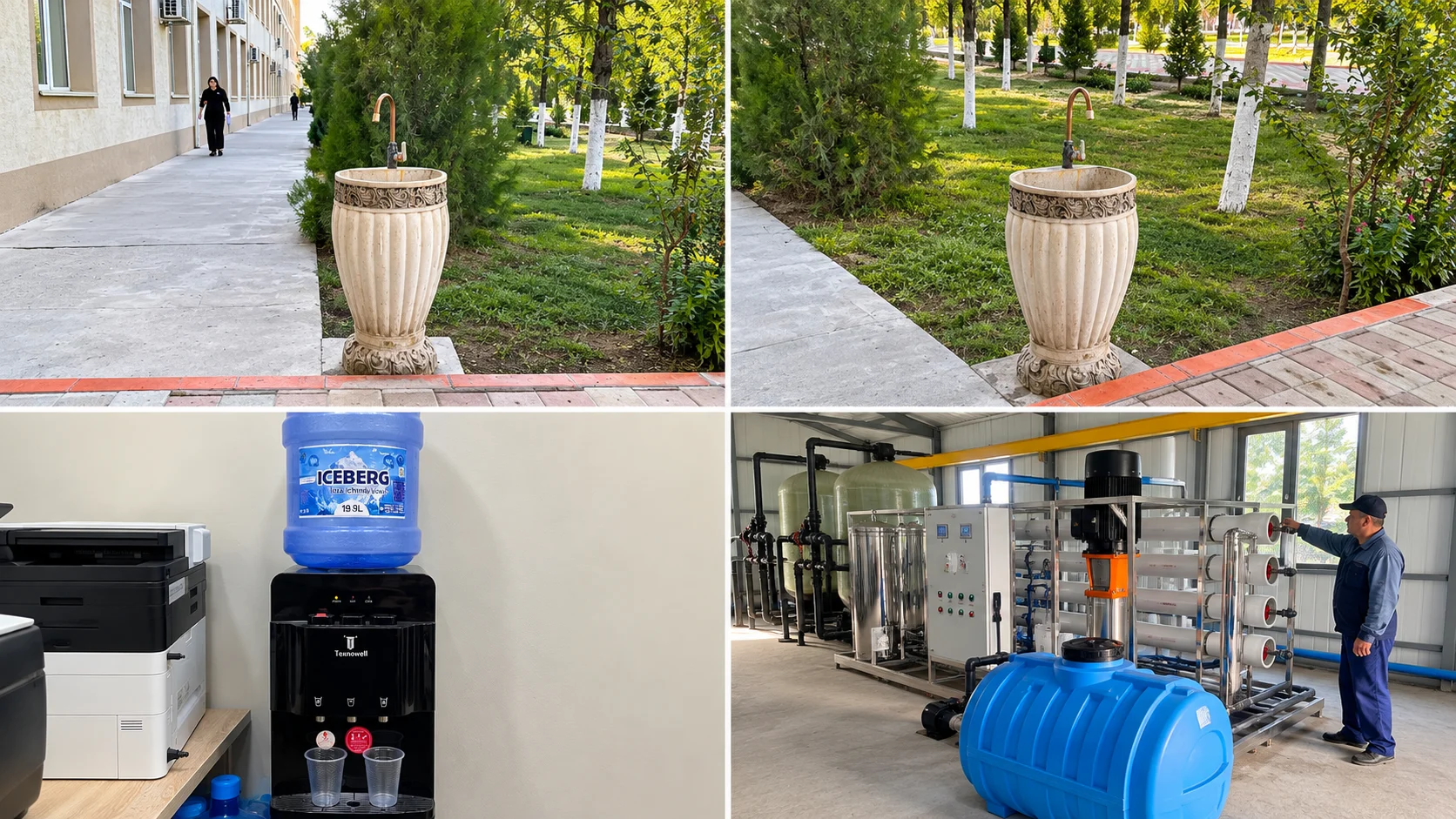
Karshi State University is committed to ensuring convenient access to drinking water across its campuses by providing drinking water dispensers in university rooms and facilities. This initiative supports the well-being of students, academic and administrative staff, and visitors by making drinking water readily accessible without charge. Drinking water dispensers are installed in university rooms and working areas, allowing members of the university community to access water throughout the working day. These facilities provide a convenient option for students and employees during lectures, laboratory activities, meetings, and other academic and administrative activities. Visitors attending university events, meetings, and official activities can also benefit from the availability of drinking water. The provision of accessible drinking water is an important part of creating a comfortable and supportive campus environment. By making drinking water available within university facilities, Karshi State University helps meet the everyday hydration needs of its community and promotes awareness of the importance of access to safe drinking water in educational institutions. The university's drinking water infrastructure complements its broader efforts to improve water management and support sustainable campus operations. Where water quality is verified through appropriate testing and monitoring, these arrangements also help ensure that drinking water provision meets relevant safety and quality requirements. Furthermore, providing drinking water dispensers can encourage members of the university community to refill reusable cups and bottles, potentially reducing reliance on single-use bottled water where refill facilities are used for this purpose. This can support waste reduction and contribute to more environmentally responsible practices on campus.
Through the provision of drinking water dispensers and accessible drinking water points, Karshi State University demonstrates its commitment to campus welfare, inclusive access to essential resources, and sustainable water management. This initiative contributes to the objectives of United Nations Sustainable Development Goal 6: Clean Water and Sanitation, particularly the promotion of access to safe drinking water and responsible water use.