
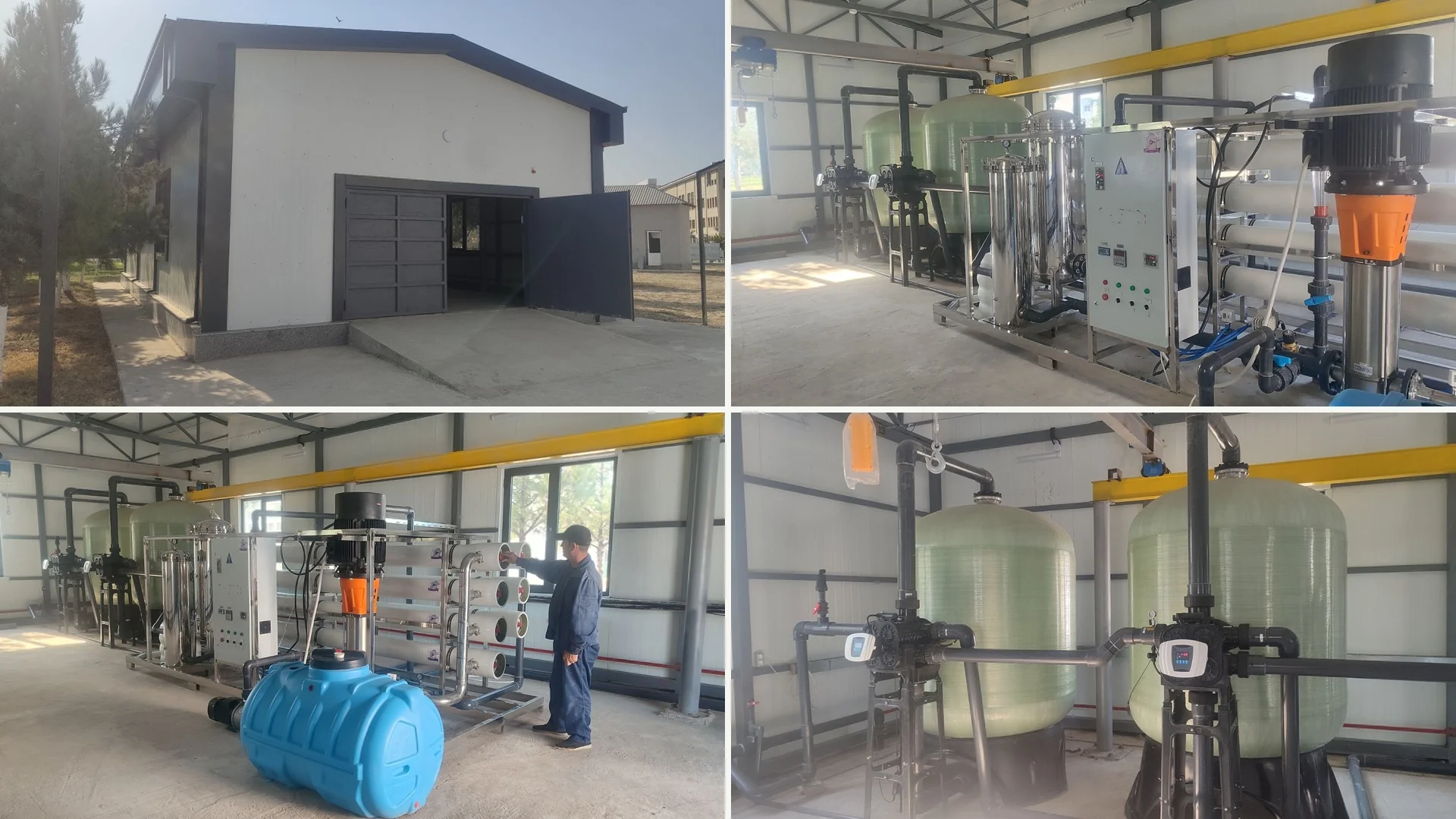
Karshi State University is committed to promoting sustainable water management, improving water quality, and using water resources efficiently across its campuses. Through the development of water purification infrastructure and water reuse practices, the university seeks to ensure a reliable water supply for its academic, residential, laboratory, and administrative facilities while strengthening its environmental sustainability efforts. The university operates 15 artesian wells that supply water to its campuses, including academic buildings, student dormitories, laboratories, and administrative facilities. This infrastructure supports the university's daily operational needs and provides a source of water for drinking, sanitation, cleaning, and other domestic purposes. Karshi State University installed an OSMOS Water Recycling and Purification Station within its campus territory. According to the university's sustainability report, the station uses multi-stage filtration technology to purify artesian water for drinking and domestic use. The reported processing capacity of the station is 300 cubic metres per hour, demonstrating the scale of the university's water treatment infrastructure. In addition to water purification, the university promotes the reuse of treated water for appropriate non-potable purposes, including sanitation and irrigation. Reusing water where technically suitable can help reduce demand for additional freshwater resources, improve operational efficiency, and support more sustainable campus management. The integration of water purification and reuse practices reflects the university's broader commitment to responsible resource consumption. These measures can also help raise awareness among students and employees about the importance of water conservation and the responsible use of water in educational institutions.
Effective wastewater management is an important component of sustainable campus operations. Universities generate wastewater through the daily activities of students, employees, laboratories, dormitories, and other facilities. Appropriate collection, treatment, and disposal are therefore essential to protecting water resources and reducing potential environmental impacts. Karshi State University's water management infrastructure provides a foundation for its sustainability initiatives. To demonstrate compliance with the wastewater treatment indicator, the university should document the specific process used to collect, treat, and discharge wastewater generated across its campuses. Where wastewater is transferred to a municipal treatment facility, relevant utility agreements or official confirmation can help establish the treatment arrangements. If the university operates a dedicated wastewater treatment system, technical documentation and evidence of its operation should be provided. It is important to distinguish between the purification of artesian water for campus use and the treatment of wastewater after use. The OSMOS station's reported capacity and function should be presented as evidence of wastewater treatment only if official technical documentation confirms that it also treats wastewater. Through its water infrastructure and resource-management initiatives, Karshi State University seeks to improve water-use efficiency, support reliable campus operations, and strengthen environmental responsibility. These activities are relevant to United Nations Sustainable Development Goal 6: Clean Water and Sanitation, which promotes access to safe water, improved water quality, and sustainable water management.
The university's ongoing efforts to document water purification, reuse, and wastewater management processes can help demonstrate its contribution to sustainable campus development and provide a transparent basis for reporting its environmental performance.