
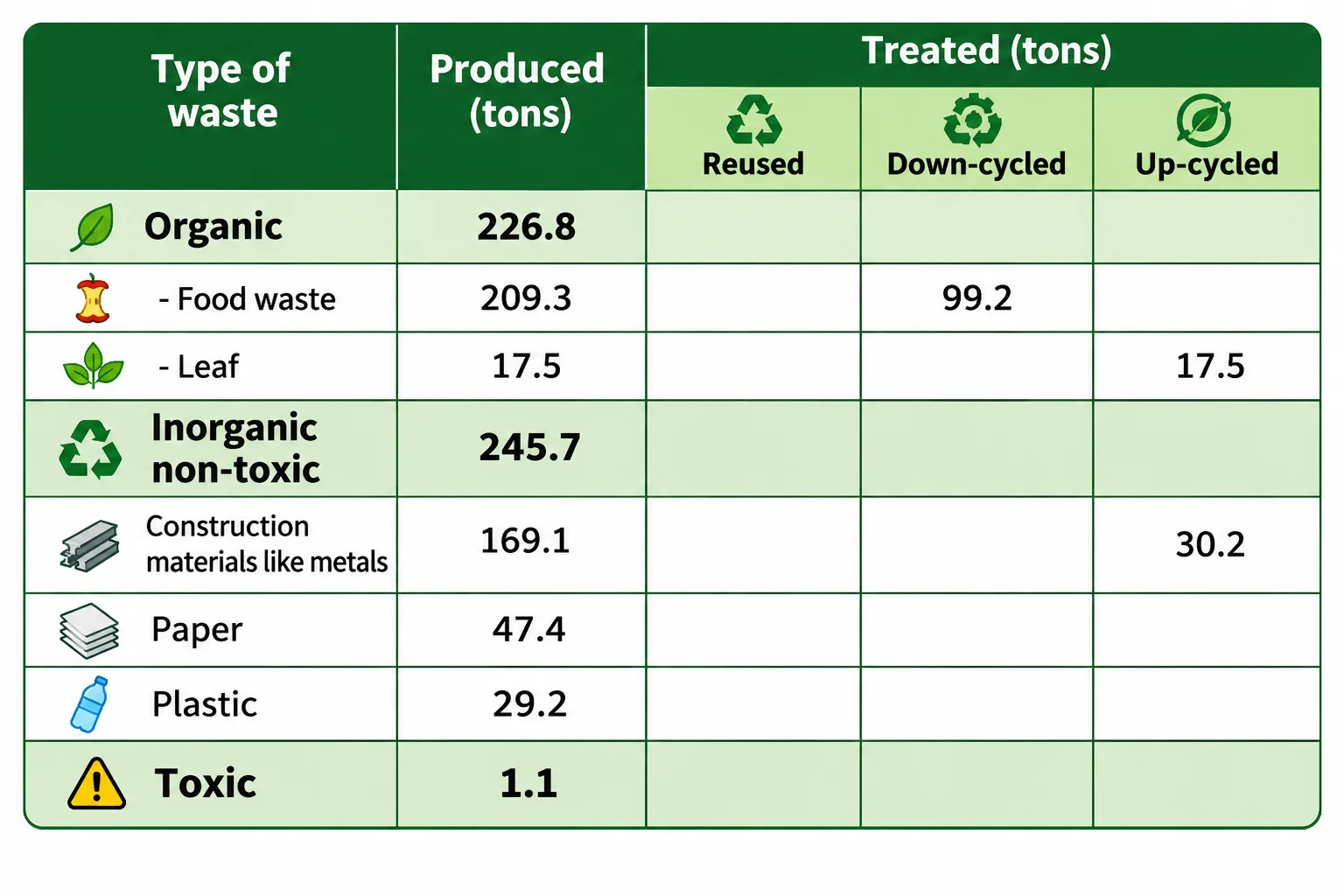
Karshi State University implements a waste management system covering organic, inorganic and toxic waste generated through its academic, administrative, catering, laboratory and campus maintenance activities. Waste is classified by type and collected separately to facilitate appropriate treatment, recycling, reuse and safe disposal. The Department of Maintenance and Environmental Management coordinates waste collection, monitoring and treatment activities in cooperation with Eco Trans, a licensed waste collection and disposal organization in Uzbekistan. Organic waste management. Organic waste generated at Karshi State University totals 226.8 tons, consisting of 209.3 tons of food waste and 17.5 tons of leaf waste collected from campus green areas. Of the reported organic waste, 99.2 tons of food waste underwent down-cycling and were processed for reuse as animal feed. This process supports the recovery of organic resources and reduces the amount of food waste requiring final disposal. In addition, 17.5 tons of leaf waste were upcycled into nutrient-rich organic material using California red worms. The resulting biomass fertilizer is used to improve soil quality and support the maintenance of the University's green areas.
The University also involves its student environmental group, "Yosh Ekopatrul," in campus clean-up and environmental awareness activities, promoting responsible waste handling and sustainable resource use.
Inorganic waste management. The University generated 245.7 tons of inorganic waste, including 169.1 tons of construction materials, 47.4 tons of paper and 29.2 tons of plastic. A separate collection approach is applied to different waste categories to facilitate appropriate handling and recovery. Of the reported construction waste, 30.2 tons of materials were upcycled through the reuse of metals and other suitable building materials in campus repair and maintenance activities.
Paper and plastic waste are collected separately and transferred to Eco Trans for appropriate waste management and recycling. The Department of Maintenance and Environmental Management coordinates these activities and monitors the collection and handling of inorganic waste. The "Yosh Ekopatrul" student environmental group also supports awareness campaigns encouraging waste segregation, material reuse and responsible waste disposal.
Toxic waste management. Karshi State University generated 1.1 tons of toxic waste, primarily associated with laboratory activities, medical training units and maintenance operations. The University applies separate collection, identification, labelling and temporary storage procedures to ensure the safe handling of hazardous materials and prevent potential environmental contamination.
Toxic waste management is coordinated by the Department of Maintenance and Environmental Management. The University cooperates with Eco Trans for the collection and appropriate treatment or disposal of hazardous waste in accordance with applicable environmental and safety requirements. Staff awareness and safe handling practices support the prevention of environmental risks associated with hazardous materials.
Institutional coordination and environmental responsibility. The Department of Maintenance and Environmental Management coordinates waste collection, segregation, monitoring and disposal activities across the University. Cooperation with Eco Trans supports the external collection and management of different waste categories, while the "Yosh Ekopatrul" student group contributes to environmental awareness and campus clean-up initiatives.
Through organic waste recovery, construction material reuse, separate waste collection and the safe management of toxic waste, Karshi State University promotes responsible resource management and contributes to reducing the environmental impact of its campus operations.