
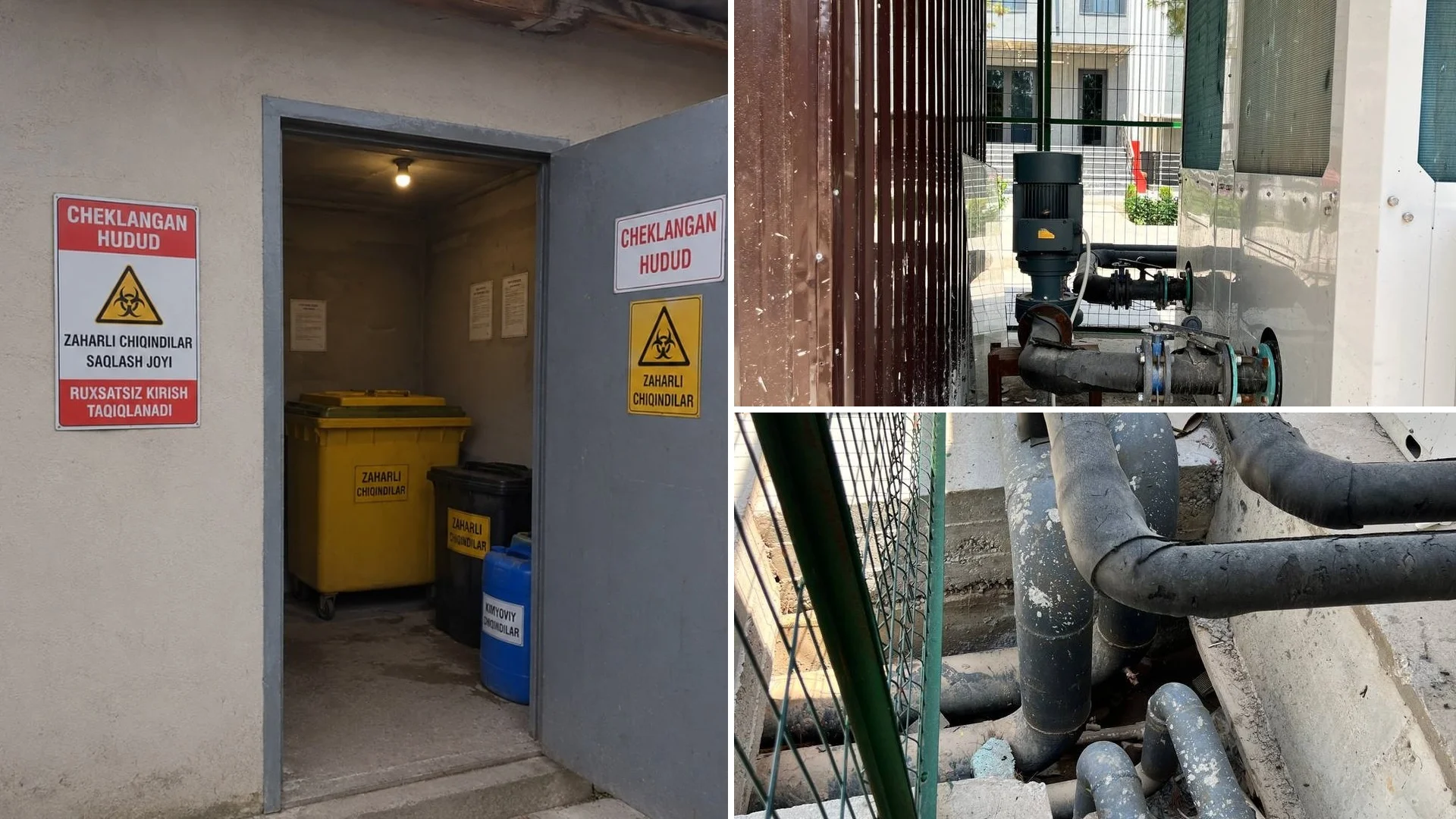
The management of toxic waste at Karshi State University (KSU) is coordinated by the university's Environmental Sustainability and Facilities Management Unit in cooperation with academic departments, laboratories, medical training units, and maintenance services. Toxic waste generated on campus includes laboratory chemicals, contaminated laboratory materials, used batteries, fluorescent lamps, printer cartridges, chemical containers, and other hazardous materials arising from teaching, research, and operational activities.
Hazardous waste is segregated at the source and collected in clearly labeled containers according to its type and risk category. Dedicated temporary storage areas are provided to ensure the safe containment of toxic waste prior to collection and transportation. Laboratory personnel, technicians, and maintenance staff are trained in proper waste handling, packaging, labeling, storage, and emergency response procedures in accordance with environmental and occupational safety requirements.
All toxic waste generated by the university is transferred to Eco Trans, a licensed centralized waste collection and disposal organization in Uzbekistan. Eco Trans is responsible for the collection, transportation, treatment, recycling where applicable, and final disposal of hazardous materials in compliance with national environmental regulations and safety standards. This system ensures that toxic waste is managed safely and does not pose risks to human health or the environment.
In addition to solid hazardous waste management, laboratory wastewater is conveyed through a dedicated pipeline network and collected in specially designed treatment ponds before entering the purification process. This separate collection system prevents the mixing of laboratory wastewater with ordinary wastewater and minimizes potential environmental contamination.
Following treatment through the university's wastewater treatment facilities and reverse osmosis technology, reclaimed water is reused for landscape irrigation and the maintenance of green areas across the campus. The wastewater treatment infrastructure is regularly monitored and maintained to ensure operational efficiency, environmental protection, and compliance with environmental regulations.
Through proper segregation, temporary storage, licensed collection, specialized treatment, and continuous monitoring, Karshi State University ensures that 100% of toxic waste generated on campus is managed in an environmentally responsible manner. These practices support campus safety, environmental protection, resource conservation, and the university's commitment to sustainable development.