
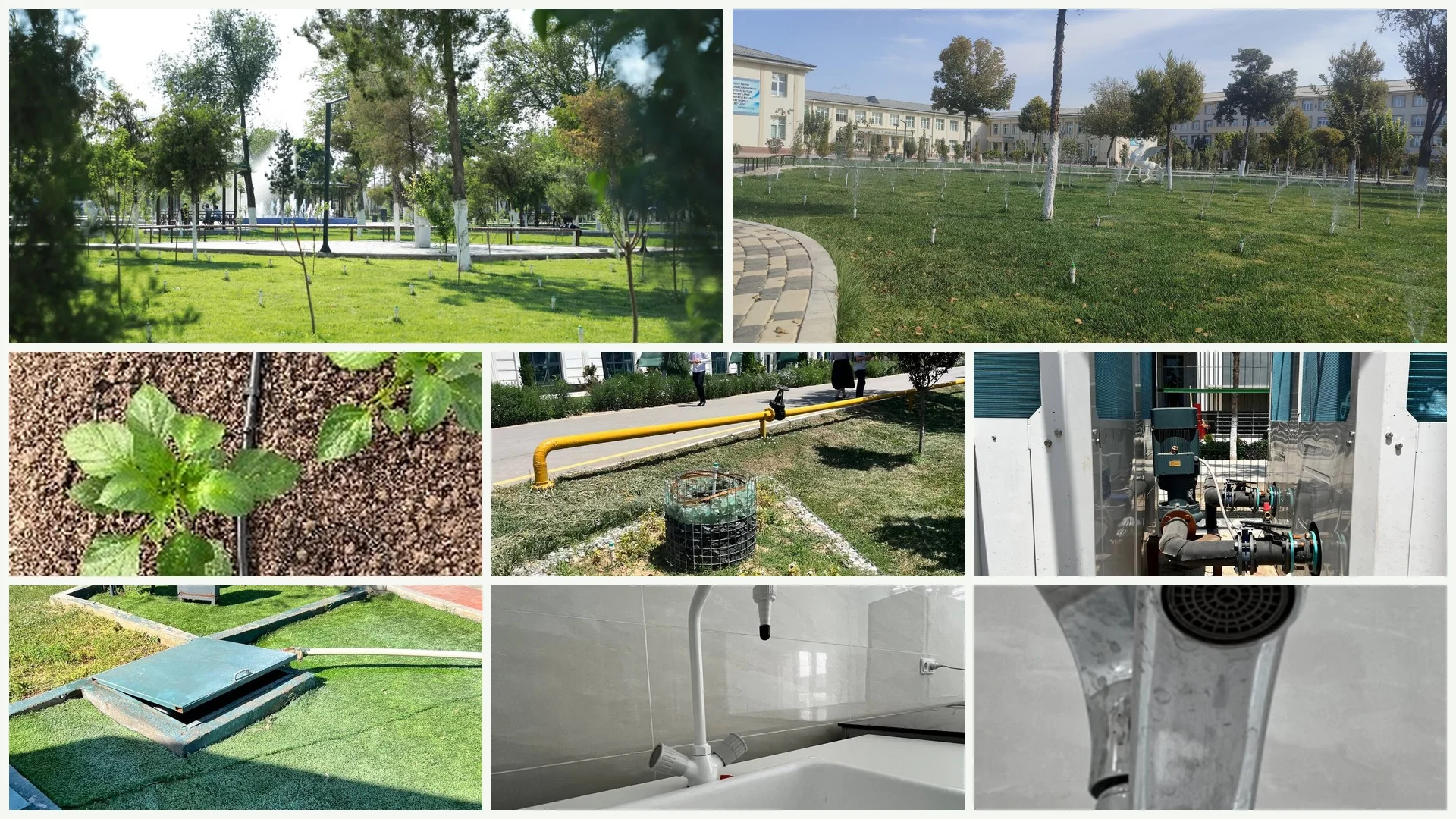
Karshi State University implements water-efficient infrastructure and technologies to support the responsible use of water resources across its campus. The University's water management measures include the following solutions. The University maintains dedicated water supply infrastructure, including external pipelines and technical distribution equipment. These facilities support the delivery and distribution of water across the campus.
Technical installations and underground access structures are maintained to provide access to water infrastructure for inspection and maintenance. These facilities support the proper operation of the campus water system. Water-saving faucet fittings, including aerator-equipped taps, are used in university facilities. Aerators regulate water flow and help reduce unnecessary water consumption during everyday use. The University maintains a separate technical facility for its water-related infrastructure. This supports the operation and maintenance of campus water management equipment. Water is used to maintain landscaped areas and campus vegetation. The University incorporates irrigation infrastructure into the management of its green spaces. Drip irrigation is used in planted areas to deliver water directly to plant roots. This method supports targeted watering and helps minimize unnecessary water loss.
Through these infrastructure solutions and water-saving technologies, Karshi State University promotes responsible water consumption, improves water management practices and supports the sustainable operation of its campus buildings.
As part of efforts to expand the garden of heat- and drought-resistant ornamental plants, staff members of Karshi State University planted seedlings of the following species: Persian silk tree (Albizia julibrissin), false indigo bush (Amorpha fruticosa), Japanese pagoda tree (Sophora japonica), tree of heaven (Ailanthus altissima), elm (Ulmus densa), dog rose (Rosa canina), common privet (Ligustrum vulgare), and Canadian redbud (Cercis canadensis). Observations were conducted to monitor their adaptation to local climatic conditions.
Beginning in early spring 2025, fruit tree seedlings, including apple, apricot, peach, plum, pear, walnut, fig, pomegranate, and grapevine, were planted. Each seedling was provided with 10 kg of biohumus to enrich the soil and improve its fertility.
The initiative aims to promote water conservation and environmental sustainability, particularly in response to the region's arid climate and the challenges posed by climate change. It focuses on planting tree species that require minimal irrigation, thereby reducing water consumption, preserving valuable water resources, and contributing to environmental protection and the development of a more sustainable green campus.